

Quick answer: To beat Hog 2.6, place your Cannon exactly 4 tiles from the river and 3 tiles from your tower, track the 8-card cycle to predict every Hog push, and convert each successful defense into a counter-push with at least one surviving troop.
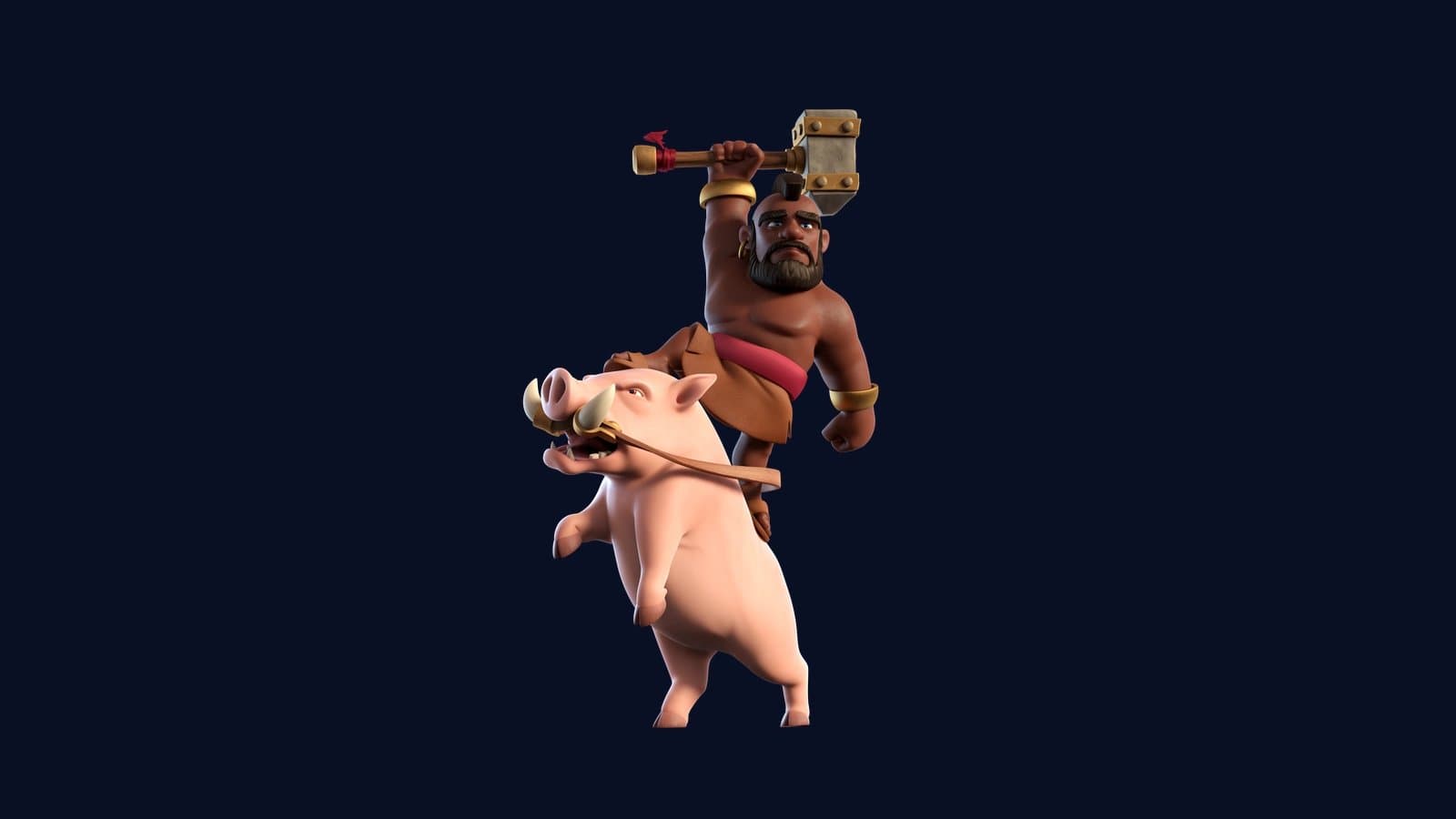
Hog 2.6 has been a top-tier archetype for years, and as of February 2026 it remains one of the decks you face most often across the 4000-8000 trophy range. No November 2025 balance patch moved its matchups: the November 24, 2025 release was the Level 16 Update, which raised the card cap from 15 to 16 and changed no card stats. Giant Skeleton — one of Hog 2.6's few hard counters — was last adjusted on July 8, 2025 (+4% damage), and its death damage was then increased 29% on May 4, 2026, moving against Hog rather than for it. Firecracker's last pre-2026 change was August 4, 2025 (sight range 8.5→8 tiles, recoil 1.5→1 tile). If you are losing to Hog Cycle consistently, this guide gives you the complete system to reverse that.
This is not a beginner overview. Every section assumes you understand basic Clash Royale mechanics and are looking for the precise, repeatable techniques that elite players use to dismantle Hog 2.6 at 6000+ trophies.
The Hog 2.6 Deck: What You Are Actually Fighting
Before you can counter something, you need to understand it precisely. The standard Hog 2.6 deck consists of: Hog Rider, Musketeer, Ice Golem, Cannon, Evolved Skeletons, Ice Spirit, The Log, and a spell slot that is Fireball in the classic build or Earthquake in the cheaper variant.
The Fireball build averages exactly 2.6 elixir per card and its full 8-card cycle costs 21 elixir. The Earthquake variant swaps a 4-cost spell for a 3-cost one, so it cycles for 20 elixir at a 2.5 average. Either way the Hog Rider comes back every 5-6 elixir depending on what the opponent cycles through. At double elixir, a skilled Hog 2.6 player can put out two Hog pushes within 8 seconds of each other.
The key insight about Hog 2.6 is that it wins through repetition, not through raw power. Each individual card is cheap and individually manageable. The threat is the relentless cycling — you deal with one Hog push, and the next one arrives before your counter has come back around. The system described in this guide addresses exactly that problem.
Identifying the Variant in the First 10 Seconds
There are two main Hog 2.6 variants you will face at 4000-8000 trophies, and identifying them early changes your defensive approach.
Classic 2.6 (Fireball variant): The opponent runs Fireball instead of Earthquake. Signs in the first 10 seconds: they open with Skeletons or Ice Spirit at the back. If they play Musketeer in the back as their opening move, they are almost certainly running the Fireball version. This variant punishes misplaced troops more than misplaced buildings.
EQ 2.6 (Earthquake variant): The opponent runs Earthquake instead of Fireball. Signs: they may open more aggressively, placing Hog at the bridge within the first 30 seconds to test your defensive structure. If your building is in a standard position and you see them hesitate before sending the Hog, they are likely measuring whether Earthquake will hit it. The EQ variant is specifically designed to destroy defensive buildings, so placement is even more critical against it.
The fastest tell: if they immediately send Hog at the bridge on the first push with Ice Spirit support and no Musketeer visible, they are likely EQ variant and baiting your building placement to hit it with the Earthquake.
Want this kind of analysis for your own deck?
TrophyCoach reads your battle log and writes a personalized action plan against the current meta — free to start.
Building Placement: The 4-3 Rule and Its Variations
The single most impactful thing you can do to beat Hog 2.6 is master building placement. A single tile in the wrong direction costs you the match.
The 4-3 Cannon Rule
The standard Cannon placement against Hog 2.6 is called the 4-3 rule: place the Cannon 4 tiles from the river and 3 tiles from your crown tower. In grid coordinates with the river as row 0 and your tower at column 9, the Cannon goes at approximately column 6, row 4 from your side of the map.
This placement accomplishes three things. First, the Hog Rider locks onto the Cannon immediately upon crossing the river instead of walking toward your tower. Second, the 4-tile depth puts the Cannon just outside the blast radius of an Earthquake centered on the river. Third, the 3-tile offset from the tower allows your tower to contribute damage to the Hog Rider while it attacks the Cannon, often securing a positive trade even if you use only the Cannon and tower fire as your defense.
If the Cannon is placed too close to the river (3 tiles or fewer), the Hog can reach it, attack briefly, then redirect to the tower if the Cannon dies. If it is placed too far back (5+ tiles), the Hog may briefly hit your tower before locking onto the Cannon.
Tesla Placement Against EQ Variant
Against Earthquake Hog 2.6, the standard Tesla placement needs adjustment. Place the Tesla 1 tile lower (farther from the river) and 1 tile inward compared to where you would normally place it. The Earthquake spell has a 3.5-tile radius and deals 300+ damage to buildings. A Tesla at standard depth will absorb significant Earthquake damage. Placing it 1 tile deeper reduces the damage it takes from an Earthquake centered on the river.
Crucially, against EQ variant, do not pre-activate your Tesla. Place it in the ground and let the Hog lock onto it before it activates. This approach serves two functions: it baits the opponent into spending their Earthquake (3 elixir) on a building that is already in the ground and not doing damage, and it forces them to make that decision reactively rather than on their own timing.
The King Tower Activation Setup
King Tower activation is one of the highest-value plays against Hog 2.6 because it adds a third defensive structure that the opponent must account for for the rest of the match. To activate the King Tower, you need the Hog Rider to briefly reach one of your side towers and deal damage while a splash troop or Tornado pull brings that damage to the King Tower.
The fastest King Tower activation against Hog 2.6: let the Hog Rider hit your crown tower once, then use Tornado centered between the crown tower and the King Tower. This pulls the Hog Rider into King Tower range and simultaneously damages it with the Tornado. The King Tower activates, fires 1-2 shots, and remains active for the rest of the match.
This technique only works if you have Tornado in your deck. If you are running a deck without Tornado, activate the King Tower by placing Skeletons or a small troop 1 tile in front of the King Tower — the Hog will redirect briefly toward them, coming close enough for the King Tower to fire.
Cycle Tracking: Predicting Every Hog Push
The single skill that separates players who beat Hog 2.6 consistently from those who struggle with it is cycle tracking. You need to know where the opponent is in their 8-card rotation at all times so you can anticipate the next Hog push rather than react to it.
How to Track the Cycle
When the match starts, begin counting from the first card the opponent plays. Each card is one count. The Hog 2.6 deck has 8 cards, and the Hog Rider typically sits in the middle of the rotation — not first, not last.
A common opening sequence for Hog 2.6: Musketeer placed at the back (counts as 1), then Ice Spirit at the bridge (2), then Hog Rider at the bridge (3). After the Hog push is defended, the opponent cycles: Skeletons (4), Log on your troop (5), Ice Golem at the bridge (6), then Ice Spirit (7), then Hog Rider again (8 = 1 in the new cycle).
In practice, the second Hog arrives roughly 8-10 seconds after the first one was defended. If 10 seconds pass and you have not seen the Hog, it is about to appear. Pre-place your Cannon during that window rather than reacting when the Hog crosses the river.
Cycle Awareness Table
Using Your Own Cycle Offensively
The best anti-Hog players do not just defend — they use their own cheap cards to stay one card ahead of the Hog Rider's return. By cycling Skeletons, Ice Spirit, and your cheapest spell, you ensure your Cannon or Tesla has cycled back around by the time the Hog arrives. An opponent who pushes into a ready building every single time will eventually run out of Earthquake charges and start making desperate plays.
Winning Elixir Trades: The Fundamental Math
Hog 2.6 wins when opponents overspend on defense. The rule is simple: defend with 4 elixir or fewer, counter-push with 6 elixir or fewer.
A standard Hog push with Hog Rider + Ice Spirit costs 5 elixir. If you defend with Cannon (3) + Skeletons (1) = 4 elixir, you generated a +1 elixir trade and have a surviving Cannon. At that point, placing Ice Spirit (1 elixir) and sending Miner or your own Hog (3 elixir) costs 4 more elixir — total 8 elixir for defense and counter, against their 5. That counter-push is the mechanism through which you accumulate tower damage over time.
Never use a 5-elixir card to stop a Hog push unless your building has already engaged it. Using Valkyrie or Baby Dragon to solo-stop a Hog Rider is a negative trade that leaves you behind in elixir and gives the opponent tempo.
EQ Baiting
Against EQ variant, the most valuable play is forcing the opponent to use their Earthquake on a non-optimal target. Earthquake costs 3 elixir and deals 300 damage to buildings. If the opponent uses EQ on your Cannon after it has already done its job (defended the Hog), they have wasted 3 elixir. If you can bait EQ onto a troop instead of a building, even better.
The EQ bait technique: instead of placing your defensive building immediately when the Hog pushes, place a troop (Skeletons, Knight, or Ice Golem) at the 4-tile mark first. Many Hog 2.6 players will reflex-EQ, thinking a building is coming. The Earthquake hits your cheap troop, you got a massive elixir advantage, and the Hog is now solo against your tower fire and remaining troops.
Advanced Technique: Tornado Pull to King Tower
For players running Tornado in their counter-Hog deck, the Tornado pull to the King Tower is one of the highest-skill plays in Clash Royale and one of the most devastating things you can do to a Hog 2.6 player.
To execute the King Tower pull, the Hog Rider must be within 5 tiles of your King Tower's range. Place Tornado centered 2-3 tiles in front of your King Tower, to the side where the Hog is approaching. The Tornado drags the Hog Rider into King Tower range for its 1.05-second duration, activating the tower and dealing the first shot's worth of King Tower damage. From that point on, every Hog push in that lane gets additional fire from the King Tower.
The precision requirement: Tornado must be placed so that its center is close enough to the King Tower to pull the Hog into range, but far enough from your crown tower that the Hog does not re-lock onto the crown tower after the Tornado ends. This placement is approximately 2 tiles directly in front of the King Tower along the side wall.
5 Best Anti-Hog Decks with Full Decklists
These decks are optimized for 4000-8000 trophies and have proven track records against Hog 2.6 in the current February 2026 meta.
Deck 1: Graveyard Poison Control
Cards: Graveyard, Poison, Knight, Tombstone, Skeleton Army, Baby Dragon, Tornado, Princess
Minimum card levels: King Level 11, all cards at level 11 minimum.
Why it works: Tombstone is Hog 2.6's single worst matchup card. It spawns skeletons continuously, kites the Hog Rider away from the tower, and produces enough skeletons that even The Log cannot fully clear them before the Hog dies. Tombstone placed 4 tiles from the river, centered, is the defensive anchor. Tornado complements it by pulling the Hog into the Tombstone's skeleton cluster for even faster resolution.
Deck 2: Miner Poison Control
Cards: Miner, Poison, Goblin Gang, Inferno Dragon, Tombstone, Tornado, Princess, Skeletons
Minimum card levels: King Level 11, all cards level 11+.
Why it works: Inferno Dragon shreds the Hog Rider once locked on. Tombstone handles the initial lock. Miner chips the tower during double elixir while your defensive structure handles the Hog. This deck punishes the EQ variant heavily because Inferno Dragon is not a building and EQ has no value against it.
Deck 3: Log Bait
Cards: Goblin Barrel, Princess, Goblin Gang, Rocket, Inferno Tower, Knight, The Log, Zap
Minimum card levels: King Level 11, all cards level 11+.
Why it works: Inferno Tower is a hard counter to Hog Rider — it locks on and melts it before the Hog can deal significant damage. The Log is reserved for Goblin Gang split defenses, not spent on Skeletons. Goblin Barrel cycling applies constant pressure that forces the Hog 2.6 player to use their Log on defense, leaving them temporarily without their primary anti-swarm tool.
Deck 4: Giant Double Prince
Cards: Giant, Prince, Dark Prince, Electro Wizard, Zap, Tornado, Mega Minion, Skeleton Army
Minimum card levels: King Level 12, all cards level 12+.
Why it works: This deck counters Hog 2.6's cycle speed by threatening such a large counter-push that the opponent must commit multiple cards to defense. Giant absorbs Musketeer fire. Tornado pulls small troops into the Giant. The counter-push threat forces the Hog 2.6 player to stop cycling aggressively and start defending reactively.
Deck 5: Pekka Bridge Spam
Cards: P.E.K.K.A, Mega Knight, Electro Wizard, Zap, The Log, Bandit, Battle Ram, Dark Prince
Minimum card levels: King Level 12, all cards level 12+.
Why it works: P.E.K.K.A completely negates the Hog Rider's tower damage when it intercepts the push. The challenge is elixir management — P.E.K.K.A costs 7 elixir and Hog 2.6 will try to cycle while you cannot respond. This deck requires advanced elixir counting and is only recommended for players above 6000 trophies who have mastered the Hog 2.6 matchup fundamentals first.
Want this kind of analysis for your own deck?
TrophyCoach reads your battle log and writes a personalized action plan against the current meta — free to start.
Matchup Table: 10 Archetypes vs Hog 2.6
| Your Deck Archetype | Primary Counter Card | Main Weakness | Verdict (your deck) |
|---|---|---|---|
| Graveyard Poison |  Tombstone | Rocket cycling ending game | Favorable |
| Log Bait |  Inferno Tower | Musketeer outranges many bait cards | Favorable |
| Miner Poison Control |  Inferno Dragon | EQ variant can punish Tombstone | Even |
| Giant Double Prince | Giant as elixir sink | Hog 2.6 cycles while Giant is building | Even |
| Pekka Bridge Spam | P.E.K.K.A intercept | Expensive defense costs tempo | Even |
| 3 Musketeer Siege | Tesla defense + Musketeers | EQ destroys Tesla | Even |
| Balloon Cycle | Balloon threat forces defense | Hog cycles faster than Balloon | Unfavorable |
| Golem Beatdown | Golem absorbs Hog trades | Hog 2.6 exhausts golem's support | Unfavorable |
| Mortar Cycle | Mortar chip + Tesla | EQ variant destroys Mortar | Even |
| Mirror Hog 2.6 | Whichever player executes better | Pure execution game | Even |
Double Elixir: How Strategy Changes
When double elixir starts at the 2:00 mark, Hog 2.6 players shift into a much more aggressive mode. They can cycle back to the Hog Rider roughly twice as fast, meaning they may attempt two Hog pushes within 6 seconds of each other — one in each lane.
How to defend double elixir against Hog 2.6:
First, acknowledge that you cannot stop both lanes simultaneously with a single building. Pre-place your Cannon in your weaker lane (whichever tower has taken more damage) and use a cheap troop in the opposite lane to slow the second Hog.
Second, maintain elixir advantage. During double elixir, Hog 2.6 players often overcommit trying to break your tower. If you defend cleanly with 4-5 elixir while they spent 10-12 on a dual-lane push, you have a massive tempo advantage for your counter-push.
Third, exploit their cycling. During double elixir, Hog 2.6 players often play so fast that they forget to place support behind their Hog. A solo Hog Rider defended by Cannon + Skeletons for 4 elixir, followed by your own Hog or win condition at 8-10 elixir, is a devastating trade in double elixir.
The "split strategy" when you lack a building: If your deck does not have a dedicated building counter to Hog Rider, use the split strategy. Send a cheap troop to one lane as a distraction while placing your defensive troop (Valkyrie, Knight, or Mega Minion) directly in the Hog's path in the other lane. The Hog will walk toward whatever is placed in its path, and splitting forces them to choose which lane to support. Neither lane gets full support, and your tower fire helps finish the job.
Replay Analysis: What to Look for After Losses
After each loss to Hog 2.6, open the replay and check these specific moments:
Building timing: At what point did you place your defensive building relative to the Hog crossing the river? If you placed it after the Hog had already hit your tower once, your reaction time is too slow. Practice placing the building pre-emptively, triggered by the opponent's card sequence rather than the Hog's animation.
Elixir at defense: Pause the replay at the moment the Hog push started and note your elixir count. If you had 8+ elixir and still let the Hog hit your tower, you either misread the cycle or panicked. If you had 4 elixir or fewer, you were caught in a cycle trap — work backward to find where you overspent.
Counter-push execution: Did you send a counter-push after every successful defense? Many players defend correctly but then cycle cheap cards instead of applying pressure, allowing the opponent to rebuild their attack without consequence. Every successful Hog defense should generate a counter-push within 2 seconds.
EQ timing: If you faced EQ variant, count how many times the opponent used Earthquake on your buildings versus on open ground. If they consistently hit your buildings, your placement needs adjustment. If they used it on empty space, you successfully baited them.
Frequently Asked Questions
What is the single best card against Hog Rider?
Tombstone is the most consistent single card against Hog Rider. It costs 3 elixir, kites the Hog away from your tower with skeleton spawns, and generates a positive elixir trade in almost every scenario. Inferno Tower is a close second if you need a harder counter that deals more damage.
How do I beat Hog 2.6 if I do not have a building in my deck?
Use the split strategy: send a cheap troop to one lane to bait the Hog Rider's attention while placing your defensive troop (Knight, Valkyrie, or Electro Wizard) directly in front of the approaching Hog in the other lane. Tower fire plus one defensive troop can kill the Hog Rider without a building in most cases, as long as you are not also dealing with Ice Golem or Musketeer support.
How do I stop Earthquake from destroying my Cannon?
Place your Cannon 4 tiles from the river and 3 tiles from your tower. At this depth, an Earthquake centered on the Hog Rider at the river's edge does not reach the Cannon. Alternatively, use Tesla instead of Cannon and place it 1 tile deeper than standard — the extra depth keeps it outside most EQ blast radii.
At what trophy level does Hog 2.6 become hard to beat?
Hog 2.6 becomes significantly harder around 6500+ trophies because opponents have been playing it long enough to have nearly perfect cycle tracking and building placement of their own. Below 6500, players often make predictable mistakes — over-committing, poor EQ timing, forgetting to support the Hog. Above 6500, you need to execute the techniques in this guide near-perfectly to maintain a positive record.
How long does it take to master the anti-Hog 2.6 matchup?
The anti-Hog 2.6 matchup takes deliberate practice: give it 20-30 focused matches applying the cycle tracking and building placement from this guide before judging the change, and expect it to feel comfortable only after 50-100 deliberate games. Review the replay after each loss to find which specific technique broke down.